 CA Sansaar


Indian Stock Markets End Slightly Lower as RBI Revises Growth Outlook and Flags Inflation Risks
 Print
Print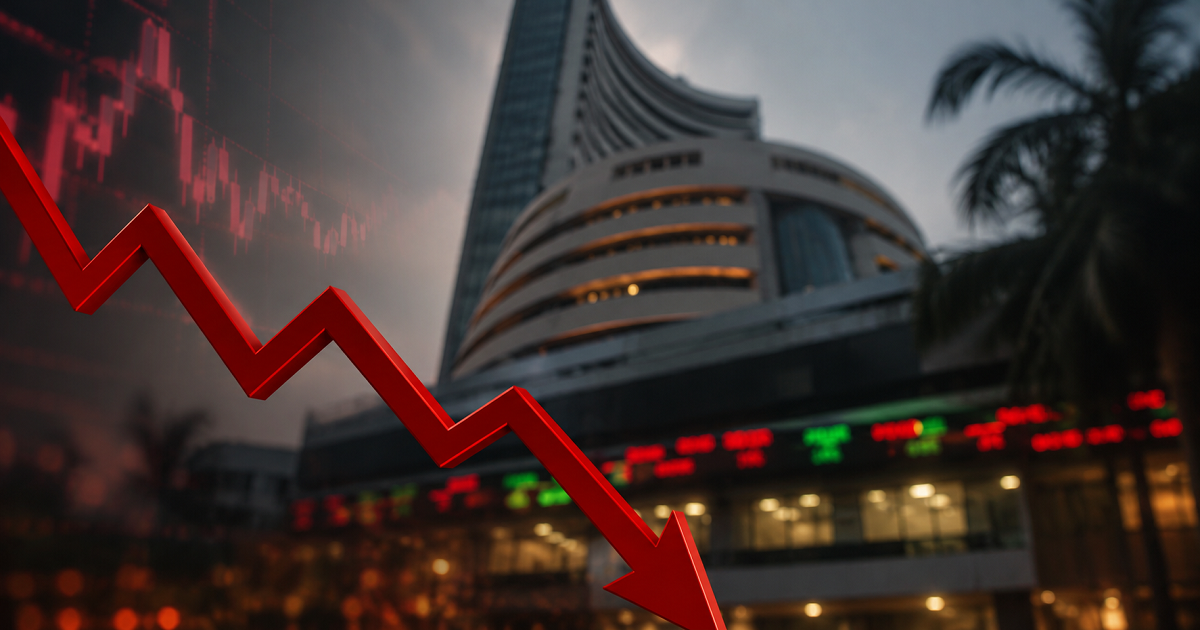
Indian equity markets concluded Friday's trading session in negative territory as investors turned cautious following the Reserve Bank of India's latest monetary policy announcement. Market sentiment weakened after the central bank revised its economic growth projections downward while indicating that inflationary pressures could intensify in the coming months.
The benchmark BSE Sensex closed 116.67 points lower, or 0.16%, at 74,243.34, while the NSE Nifty 50 slipped 49.85 points, or 0.21%, to settle at 23,366.70.
Volatile Trading Session Reflects Investor Caution
Markets witnessed considerable volatility throughout the day as participants assessed the implications of the RBI's policy decisions and economic outlook. The Sensex fluctuated within a broad range of nearly 729 points, touching an intraday high of 74,717.57 and a low of 73,988.75 before closing lower.
Analysts attributed the market weakness to a combination of profit booking, concerns over slowing economic growth, and expectations of higher inflation. Ongoing foreign investor selling, geopolitical tensions, and weak cues from other Asian markets further weighed on sentiment.
RBI Keeps Repo Rate Unchanged at 5.25%
In line with market expectations, the Reserve Bank of India (RBI) maintained the benchmark repo rate at 5.25%. The decision was taken unanimously by the Monetary Policy Committee (MPC), which also retained its "neutral" monetary policy stance.
The central bank highlighted increasing challenges arising from prolonged geopolitical tensions in West Asia, elevated crude oil prices, and disruptions in global supply chains. These factors, according to the RBI, pose risks to both economic growth and price stability.
At the same time, the RBI projected inflation to rise to 5.1%, prompting investors to reassess expectations regarding future monetary policy actions.
Measures Announced to Attract Foreign Capital
Alongside the policy announcement, the RBI unveiled several initiatives aimed at strengthening foreign investment inflows and supporting the Indian rupee.
Among the key measures announced were:
- Removal of taxes on interest income and capital gains for eligible foreign investors investing in government securities.
- Concessional terms for foreign-currency deposits placed by Non-Resident Indians (NRIs).
- Support mechanisms to reduce hedging costs on select offshore borrowings.
These initiatives are intended to improve foreign investor participation in Indian financial markets while enhancing currency stability amid global economic uncertainties.
Sectoral Performance and Major Movers
Selling pressure was visible across several heavyweight stocks, contributing to the broader market decline.
Among the top losers in the Sensex pack were:
- Trent
- Tata Consultancy Services (TCS)
- Tata Steel
- NTPC
- HCL Technologies
- Bharti Airtel
Meanwhile, some stocks managed to buck the trend and post gains, including:
- Hindustan Unilever
- Axis Bank
- Adani Ports
- Bajaj Finance
Outlook for Investors
Market participants are expected to closely monitor inflation trends, foreign investment flows, crude oil prices, and geopolitical developments in the coming weeks. While the RBI's supportive measures for foreign capital may provide medium-term market stability, concerns over slower growth and rising inflation could continue to influence investor sentiment in the near term.
Short Summary
Indian stock markets ended marginally lower after the RBI retained the repo rate at 5.25% but lowered its growth outlook and projected inflation at 5.1%. Investor sentiment was further affected by foreign fund outflows, geopolitical uncertainties, and weak global market cues.
Category : Shares & Stock | Comments : 0 | Hits : 25







Comments