 CA Sansaar


New Rules For F&O Traders: Keep These Things In Mind While Filing ITR-3
 Print
Print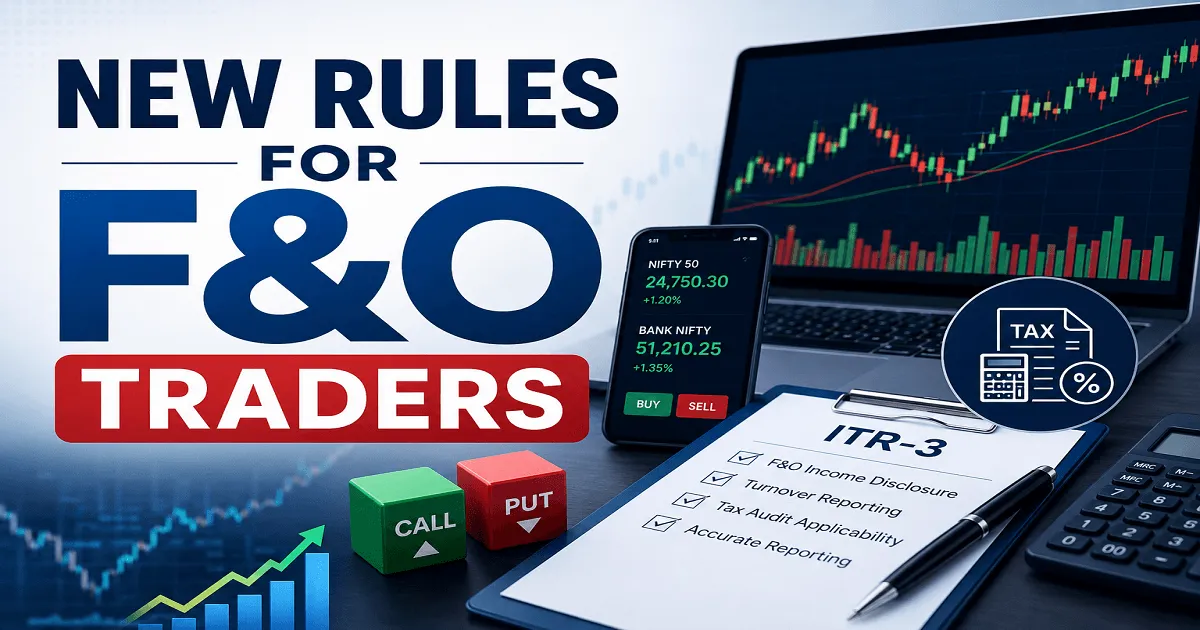
As the ITR Filing season begins for Assessment Year (AY) 2026-27, taxpayers engaged in Futures and Options (F&O) trading need to be more careful than ever. The Income Tax Department has introduced important changes in the ITR-3 form that require F&O traders to provide more detailed disclosures while filing their returns. These changes aim to improve transparency, reduce filing errors, and ensure accurate reporting of derivative transactions. If you trade in futures or options, understanding these new requirements can help you avoid notices and ensure a smooth tax filing process.
What Has Changed in ITR-3 for F&O Traders?
The updated ITR-3 form now includes separate reporting fields specifically for Futures and Options (F&O) transactions. Earlier, many traders reported their F&O income under general business income without providing transaction-specific details. However, under the revised format, taxpayers must disclose additional information related to their derivative trading activities.
The new reporting structure helps the Income Tax Department distinguish F&O income from other business receipts and improves the accuracy of tax assessments.
Why Are These Changes Important?
The government has been focusing on improving tax compliance and reducing discrepancies in income reporting. Since F&O trading volumes have increased significantly over the past few years, introducing dedicated reporting fields enables better monitoring of derivative transactions.
These changes also simplify the verification process and help taxpayers report their income correctly while reducing the chances of future disputes.
Key Things F&O Traders Should Keep in Mind
1. Report F&O Income Correctly
Income earned from Futures and Options trading is treated as non-speculative business income under the Income Tax Act. Therefore, it should be reported under business income in ITR-3 and not as capital gains.
Proper classification is essential to avoid incorrect tax computation.
2. Calculate Turnover Accurately
One of the most important aspects of filing ITR-3 is calculating F&O turnover correctly. The turnover is not the total value of contracts traded. Instead, it is calculated based on:
- Absolute profit and loss from trades
- Premium received from options sold
- Reverse trade differences, wherever applicable
An incorrect turnover calculation may affect audit requirements and tax liability.
3. Check Tax Audit Applicability
Depending on the turnover, profits, and provisions of the Income Tax Act, some F&O traders may be required to get their accounts audited.
Taxpayers should carefully evaluate whether they fall under the audit provisions before filing their return. Consulting a tax professional can help avoid non-compliance.
4. Maintain Proper Records
Keep all supporting documents safely, including:
- Broker statements
- Contract notes
- Profit and Loss reports
- Ledger statements
- Bank statements
These records help verify reported figures and may be required if the Income Tax Department seeks clarification.
5. Verify Loss Reporting Carefully
F&O losses can generally be carried forward and adjusted against future business income, provided the return is filed within the prescribed due date.
Incorrect reporting of losses or delayed filing may result in losing this important tax benefit.
Consequences of Incorrect Filing
The revised ITR-3 seeks more detailed disclosures. If mandatory information is left blank or incorrect details are provided, the Income Tax Department may treat the return as defective under the applicable provisions of the Income Tax Act.
A defective return requires rectification within the prescribed time. Failure to respond may result in the return being treated as invalid, which could lead to additional compliance issues.
Therefore, taxpayers should carefully review every section before submitting their return.
Tips for Hassle-Free ITR-3 Filing
To ensure a smooth filing experience:
- Review all broker reports before filing.
- Calculate turnover using the prescribed method.
- Report business income accurately.
- Preserve supporting documents.
- Verify all disclosures before submission.
- File the return before the due date.
- Seek professional guidance if your transactions are complex.
Taking these simple precautions can significantly reduce the chances of notices, defects, or future tax disputes.
Conclusion
The revised ITR-3 form reflects the government's continued focus on improving tax transparency for derivative traders. With separate reporting requirements, accurate turnover calculation, and detailed disclosures becoming increasingly important, F&O traders should prepare their returns carefully. Proper documentation, timely filing, and correct reporting can help taxpayers remain compliant while avoiding unnecessary complications.
As the ITR Filing season begins for Assessment Year (AY) 2026-27, taxpayers engaged in Futures and Options (F&O) trading need to be more careful than ever. The Income Tax Department has introduced important changes in the ITR-3 form that require F&O traders to provide more detailed disclosures while filing their returns. These changes aim to improve transparency, reduce filing errors, and ensure accurate reporting of derivative transactions. If you trade in futures or options, understanding these new requirements can help you avoid notices and ensure a smooth tax filing process.
What Has Changed in ITR-3 for F&O Traders?
The updated ITR-3 form now includes separate reporting fields specifically for Futures and Options (F&O) transactions. Earlier, many traders reported their F&O income under general business income without providing transaction-specific details. However, under the revised format, taxpayers must disclose additional information related to their derivative trading activities.
The new reporting structure helps the Income Tax Department distinguish F&O income from other business receipts and improves the accuracy of tax assessments.
Why Are These Changes Important?
The government has been focusing on improving tax compliance and reducing discrepancies in income reporting. Since F&O trading volumes have increased significantly over the past few years, introducing dedicated reporting fields enables better monitoring of derivative transactions.
These changes also simplify the verification process and help taxpayers report their income correctly while reducing the chances of future disputes.
Key Things F&O Traders Should Keep in Mind
1. Report F&O Income Correctly
Income earned from Futures and Options trading is treated as non-speculative business income under the Income Tax Act. Therefore, it should be reported under business income in ITR-3 and not as capital gains.
Proper classification is essential to avoid incorrect tax computation.
2. Calculate Turnover Accurately
One of the most important aspects of filing ITR-3 is calculating F&O turnover correctly. The turnover is not the total value of contracts traded. Instead, it is calculated based on:
- Absolute profit and loss from trades
- Premium received from options sold
- Reverse trade differences, wherever applicable
An incorrect turnover calculation may affect audit requirements and tax liability.
3. Check Tax Audit Applicability
Depending on the turnover, profits, and provisions of the Income Tax Act, some F&O traders may be required to get their accounts audited.
Taxpayers should carefully evaluate whether they fall under the audit provisions before filing their return. Consulting a tax professional can help avoid non-compliance.
4. Maintain Proper Records
Keep all supporting documents safely, including:
- Broker statements
- Contract notes
- Profit and Loss reports
- Ledger statements
- Bank statements
These records help verify reported figures and may be required if the Income Tax Department seeks clarification.
5. Verify Loss Reporting Carefully
F&O losses can generally be carried forward and adjusted against future business income, provided the return is filed within the prescribed due date.
Incorrect reporting of losses or delayed filing may result in losing this important tax benefit.
Consequences of Incorrect Filing
The revised ITR-3 seeks more detailed disclosures. If mandatory information is left blank or incorrect details are provided, the Income Tax Department may treat the return as defective under the applicable provisions of the Income Tax Act.
A defective return requires rectification within the prescribed time. Failure to respond may result in the return being treated as invalid, which could lead to additional compliance issues.
Therefore, taxpayers should carefully review every section before submitting their return.
Tips for Hassle-Free ITR-3 Filing
To ensure a smooth filing experience:
- Review all broker reports before filing.
- Calculate turnover using the prescribed method.
- Report business income accurately.
- Preserve supporting documents.
- Verify all disclosures before submission.
- File the return before the due date.
- Seek professional guidance if your transactions are complex.
Taking these simple precautions can significantly reduce the chances of notices, defects, or future tax disputes.
Conclusion
The revised ITR-3 form reflects the government's continued focus on improving tax transparency for derivative traders. With separate reporting requirements, accurate turnover calculation, and detailed disclosures becoming increasingly important, F&O traders should prepare their returns carefully. Proper documentation, timely filing, and correct reporting can help taxpayers remain compliant while avoiding unnecessary complications
If you need professional assistance with ITR Filing 2026, F&O taxation, GST, audits, or other tax compliance matters, Casansaar is a trusted platform that connects taxpayers with experienced chartered accountants across India, helping you file your returns accurately and confidently.
Category : ITR | Comments : 0 | Hits : 1124







Comments