 CA Sansaar


WHY CASES TAKE SO LONG IN INDIAN COURTS? CAUSES, CHALLENGES & SOLUTIONS
 Print
Print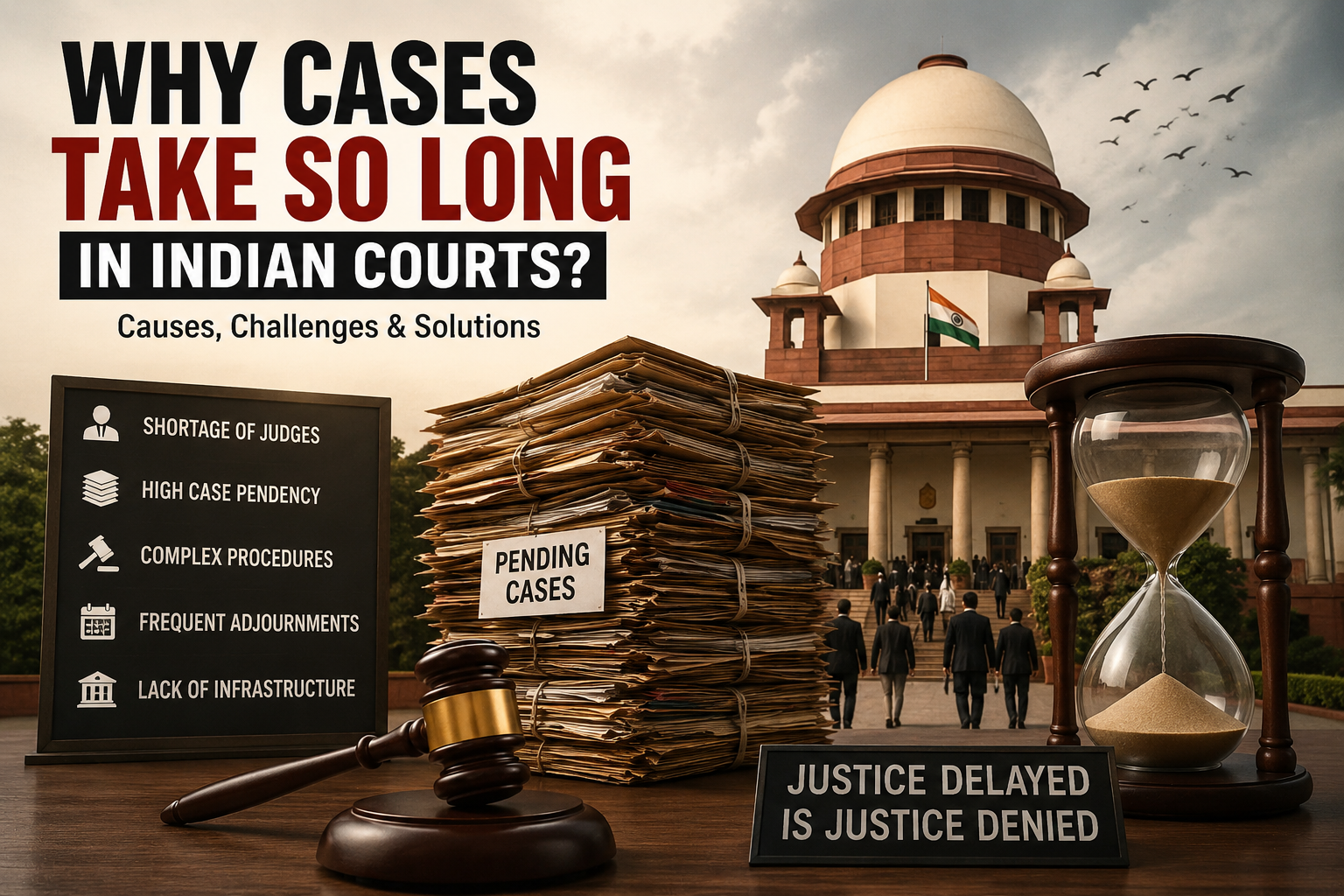
Court : Supreme Court of India
Brief :
The Indian judiciary faces significant delays due to a large backlog of pending cases, shortage of judges, frequent adjournments, procedural complexities, inadequate court infrastructure, and increasing litigation. According to the National Judicial Data Grid (NJDG), millions of cases remain pending across various courts in India. The Law Commission of India has identified judicial vacancies, inefficient case management, and delays in investigation and evidence collection as major contributors to pendency. To address these challenges, experts recommend increasing judicial strength, adopting technology-driven case management systems, expanding e-courts, limiting unnecessary adjournments, promoting alternative dispute resolution mechanisms, and improving judicial infrastructure. These reforms can help ensure faster and more efficient delivery of justice.
Citation : National Judicial Data Grid (NJDG), Department of Justice, Government of India; Law Commission of India Report No. 245 on Arrears and Backlog in Courts.
Judgement : The Supreme Court examined the issue of judicial backlog and stressed the importance of increasing judicial capacity, improving infrastructure, and adopting efficient court management systems to reduce delays in the administration of justice. For a judiciary article titled "Why Cases Take So Long in Indian Courts? Causes, Challenges & Solutions", the stronger and more commonly cited judgment is: Hussain & Anr. v. Union of India, (2017) 5 SCC 702.






Comments