 CA Sansaar


CAG Flags Serious Deficiencies in GST E-Way Bill System in J&K
 Print
Print
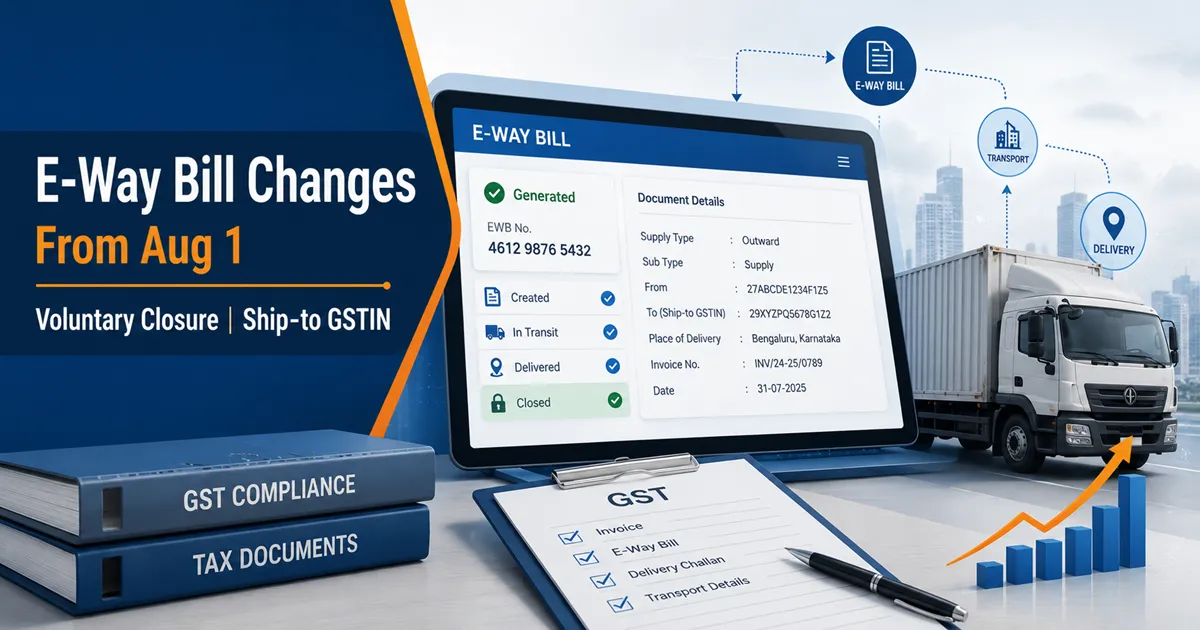
A recent report by the Comptroller and Auditor General (CAG) has brought to light significant deficiencies and structural issues in the functioning of the GST E-Way Bill (EWB) system in Jammu and Kashmir. The system, which tracks the movement of goods above a specified value, appears to suffer from weak monitoring and compliance mechanisms.
Introduced in April 2018 for inter-state movement of goods exceeding ₹50,000, the EWB system was later extended to intra-state transactions in J&K in a phased manner with the same threshold. However, the audit findings indicate multiple irregularities in its implementation.
Among the key concerns, the report identified cases where ineligible taxpayers continued under the Composition Scheme. Additionally, several taxpayers generated E-Way Bills while either filing ‘nil’ returns or failing to submit returns altogether, involving a tax impact of approximately ₹2.29 crore.
The audit also uncovered discrepancies between E-Way Bill data and GST returns. Between 2018 and 2022, three taxpayers generated 5,739 E-Way Bills reflecting a tax value of ₹67.99 crore. However, only ₹64.24 crore was declared in GSTR-3B filings, leaving a gap of ₹3.75 crore. The absence of proper reconciliation between GSTR-1 and GSTR-3B made it difficult to trace invoice-level mismatches.
Further compliance issues were noted, including E-Way Bills generated by cancelled taxpayers and the use of invalid vehicle details such as scrapped vehicles, two-wheelers, or vehicles with inactive registrations. Instances of multiple E-Way Bills being issued against a single invoice were also observed.
The report emphasized staffing challenges within the Enforcement Wing during 2018–22, with vacancy levels ranging significantly across various posts. This shortage likely hampered effective monitoring and enforcement activities.
Additionally, the audit pointed out the lack of defined targets for E-Way Bill verification. In 47 instances, mandatory physical verification reports (Form MOV-04) were not prepared, raising concerns about the accuracy of goods verification. The absence of a designated Grievance Redressal Officer for handling complaints submitted via Form GST EWB-04 was also highlighted.
Other lapses included failure to impose late fees on delayed return filings, non-charging of interest on overdue tax payments, delays in cancellation of registrations, and non-submission of final returns (GSTR-10). There were also cases where initiated actions remained incomplete.
On a broader level, the audit identified issues such as underpayment or non-payment of interest, unresolved tax liabilities, incorrect claims of Input Tax Credit (ITC), mismatches in return filings, and ITC availed without corresponding tax payment by suppliers. These discrepancies collectively involved a substantial tax implication of ₹439.36 crore.
Introduced in April 2018 for inter-state movement of goods exceeding ₹50,000, the EWB system was later extended to intra-state transactions in J&K in a phased manner with the same threshold. However, the audit findings indicate multiple irregularities in its implementation.
Among the key concerns, the report identified cases where ineligible taxpayers continued under the Composition Scheme. Additionally, several taxpayers generated E-Way Bills while either filing ‘nil’ returns or failing to submit returns altogether, involving a tax impact of approximately ₹2.29 crore.
The audit also uncovered discrepancies between E-Way Bill data and GST returns. Between 2018 and 2022, three taxpayers generated 5,739 E-Way Bills reflecting a tax value of ₹67.99 crore. However, only ₹64.24 crore was declared in GSTR-3B filings, leaving a gap of ₹3.75 crore. The absence of proper reconciliation between GSTR-1 and GSTR-3B made it difficult to trace invoice-level mismatches.
Further compliance issues were noted, including E-Way Bills generated by cancelled taxpayers and the use of invalid vehicle details such as scrapped vehicles, two-wheelers, or vehicles with inactive registrations. Instances of multiple E-Way Bills being issued against a single invoice were also observed.
The report emphasized staffing challenges within the Enforcement Wing during 2018–22, with vacancy levels ranging significantly across various posts. This shortage likely hampered effective monitoring and enforcement activities.
Additionally, the audit pointed out the lack of defined targets for E-Way Bill verification. In 47 instances, mandatory physical verification reports (Form MOV-04) were not prepared, raising concerns about the accuracy of goods verification. The absence of a designated Grievance Redressal Officer for handling complaints submitted via Form GST EWB-04 was also highlighted.
Other lapses included failure to impose late fees on delayed return filings, non-charging of interest on overdue tax payments, delays in cancellation of registrations, and non-submission of final returns (GSTR-10). There were also cases where initiated actions remained incomplete.
On a broader level, the audit identified issues such as underpayment or non-payment of interest, unresolved tax liabilities, incorrect claims of Input Tax Credit (ITC), mismatches in return filings, and ITC availed without corresponding tax payment by suppliers. These discrepancies collectively involved a substantial tax implication of ₹439.36 crore.
Category : CAG | Comments : 0 | Hits : 75






Comments