 CA Sansaar


CBIC Considers Single GST Registration Under One PAN
 Print
Print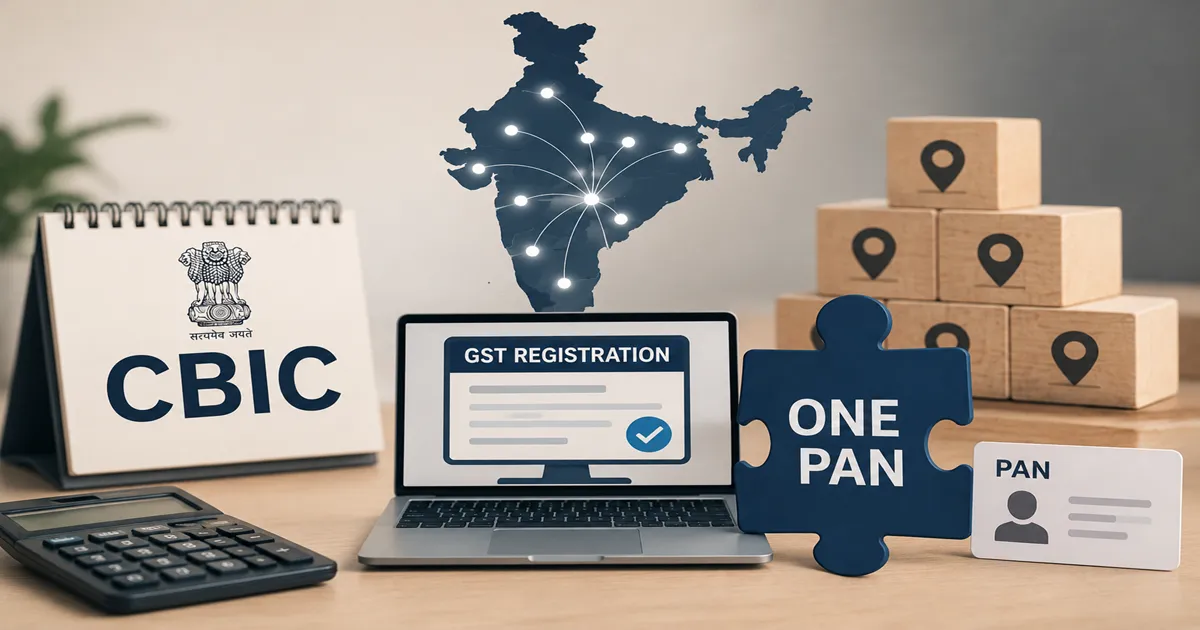
In a significant move aimed at simplifying GST compliance and improving the ease of doing business, the Central Board of Indirect Taxes and Customs (CBIC) is examining a proposal to introduce a centralised GST registration framework for businesses having multiple GST registrations under the same Permanent Account Number (PAN) across different Central GST jurisdictions. A high-level working group has been constituted to study the feasibility, legal implications, and implementation framework of the proposal.
If implemented, the proposal could bring a major change to the existing GST registration system by allowing eligible taxpayers to deal with a single Central GST authority instead of multiple tax jurisdictions, thereby reducing administrative burden and compliance costs.
Current GST Registration Framework
Under the present GST law, businesses are required to obtain separate GST registrations for each State or Union Territory where they have a place of business. Consequently, companies operating across multiple States often maintain several GST registrations under the same PAN and interact with different Central and State GST authorities for compliance, assessments, audits and investigations.
This often results in duplication of compliance activities, multiple audits, separate notices from different jurisdictions, and increased administrative costs for businesses operating on a pan-India basis.
Proposal Under Examination
According to reports, CBIC's working group is evaluating a model under which taxpayers having multiple GST registrations linked to a single PAN may be administered by one designated Central GST jurisdiction for specified administrative functions.
The proposal is currently at the examination stage, and the working group is expected to study:
- Operational feasibility of centralised administration.
- Legal changes, if any, required under the GST framework.
- Impact on taxpayers and tax administration.
- Coordination between Central and State GST authorities.
- Technology and GSTN system requirements.
Expected Benefits
If the proposal is implemented, businesses could benefit from:
- Simplified GST compliance for multi-state entities.
- Reduced interaction with multiple tax authorities.
- Better coordination in assessments and audits.
- Lower compliance and administrative costs.
- Improved ease of doing business.
- Greater consistency in tax administration across jurisdictions.
Large corporate groups, e-commerce companies, logistics operators, manufacturers and service providers with operations across several States are expected to be among the biggest beneficiaries of such a framework.
No Change Announced Yet
At present, no decision has been taken to implement centralised GST registration. The proposal remains under examination by the CBIC working group, and any change to the existing GST registration framework would require appropriate policy decisions and, where necessary, amendments to the relevant legal provisions.
Businesses will therefore continue to follow the existing GST registration requirements until any official notification or legislative amendment is issued.
Tax professionals and industry bodies have long advocated simplification of GST compliance for businesses operating in multiple States. A centralised administrative model is expected to reduce duplication of proceedings and improve efficiency without altering taxpayers' liability to obtain registrations wherever required under the GST law.
Whether the proposal ultimately translates into legislative reform will depend on the recommendations of the working group and subsequent decisions by the Government. CA Sansaar
Category : GST | Comments : 0 | Hits : 365








Comments