 CA Sansaar


RBI Challenges Madras High Court Order on Transfer of Swami Satyananda’s Funds to Italy
 Print
Print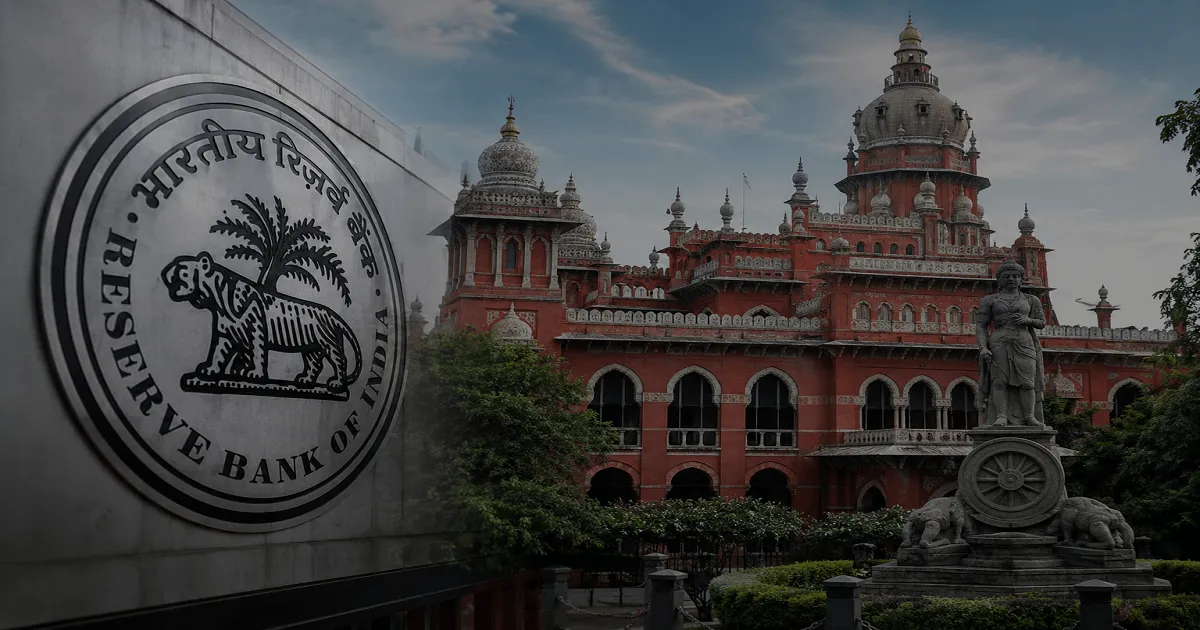
The Reserve Bank of India (RBI) has approached the Madras High Court by filing a writ appeal against a recent single-judge ruling that directed the transfer of several crores of rupees belonging to Sushil Mazumdar, popularly known as Swami Satyananda, to an Italian bank account linked to his spiritual institution.
Swami Satyananda, an Indian-born spiritual leader, established the Sadhana Ashram in San Presto of Assisi, Italy, in 1976. He later passed away in Tibet in 2007. Following his death, a dispute emerged over substantial funds and investments held in multiple accounts at the State Bank of India (SBI), Puducherry branch.
A division bench comprising Chief Justice Sushrut Arvind Dharmadhikari and Justice G. Arul Murugan has admitted the RBI’s appeal and temporarily stayed the implementation of the earlier order. The bench has also granted four weeks’ time to Marco Licata, a Switzerland-based former president and current executive committee member of the ashram, to submit his response.
Origin of the Dispute
The legal battle began in 2022 when Marco Licata approached the Madras High Court claiming that he had been nominated by Swami Satyananda to receive the funds. According to Licata, despite repeated requests since 2008, SBI had declined to release or transfer the money held in the spiritual leader’s accounts.
SBI contested the claim, arguing that the nomination process had not been completed in accordance with legal requirements. As a result, Licata was unable to obtain relief even after seeking intervention through the banking ombudsman mechanism.
Subsequently, Licata revised his position and informed the court that he had no objection if the funds were transferred directly to the official bank account of Sadhana Ashram in Italy rather than to his personal account.
Court Sought RBI’s Clarification
While hearing the matter, Justice N. Anand Venkatesh observed that the primary objective should be to ensure that the funds ultimately reach their rightful destination. Since the proposed transfer involved an overseas remittance to Credem Banca’s Perugia branch in Italy, the court sought clarification from RBI regarding the legal permissibility of such a transaction under Indian banking regulations.
In response, RBI submitted a detailed affidavit emphasizing that nomination provisions under banking laws permit only an individual to be designated as a nominee. According to the central bank, an organization, institution, association, or other legal entity cannot ordinarily be treated as a nominee for receiving funds held in a bank account.
RBI further argued that any transfer of funds from India to a foreign bank account would require the central bank’s explicit approval under the applicable regulatory framework.
Single Judge’s Interpretation
Despite RBI’s objections, Justice Venkatesh relied on a 2016 Calcutta High Court judgment while interpreting the provisions of Section 45-ZA of the Banking Regulation Act, 1949. The court noted that the term “person” used in the statute was not specifically defined and therefore could be interpreted with reference to the General Clauses Act.
Based on this reasoning, the court concluded that the term “person” could include not only individuals but also companies, associations, and bodies of individuals, whether incorporated or otherwise.
The judge therefore held that an organization could validly be nominated to receive funds and directed that the money lying in Swami Satyananda’s various bank accounts be transferred to the Italian bank account of Sadhana Ashram within eight weeks.
RBI’s Appeal Continues
The RBI has now challenged this interpretation before the division bench, resulting in a temporary stay on the transfer order. The outcome of the appeal is expected to have wider implications for the interpretation of nomination provisions under banking laws and for the regulatory requirements governing cross-border fund transfers.
Short Summary
The RBI has challenged a Madras High Court order directing the transfer of Swami Satyananda’s funds to the Sadhana Ashram in Italy. The central bank argues that only individuals can be nominees under banking laws and that overseas remittance requires RBI approval. The High Court has currently stayed the transfer pending further proceedings.
Category : RBI | Comments : 0 | Hits : 300









Comments