 CA Sansaar


Gujarat Government Intensifies GST Compliance Drive to Achieve Higher Revenue Target
 Print
Print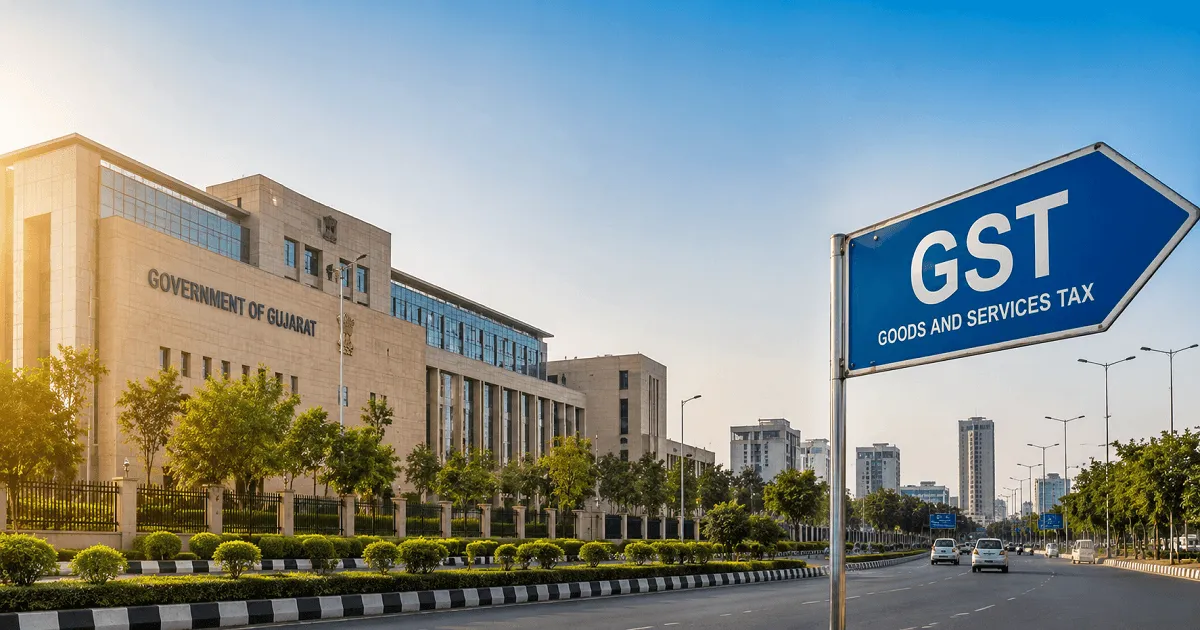
Facing a gap between projected and actual Goods and Services Tax (GST) collections, the Gujarat Government has instructed its Commercial Tax Department to significantly enhance revenue mobilization efforts during the financial year 2026–27. The state has now fixed a revised GST collection target of ₹84,050 crore, which is approximately 5% higher than the original budget estimate of ₹81,000 crore.
The revised target emerged from a high-level review meeting led by Chief Secretary Manoj Das, reflecting the government's determination to strengthen revenue generation amid growing fiscal demands. Achieving this goal will require a substantial increase from the ₹74,000 crore GST revenue collected during FY 2025–26, representing an additional collection requirement of more than ₹10,000 crore.
Enhanced Enforcement to Curb Tax Evasion
To bridge the revenue gap, tax authorities are preparing to implement a stricter enforcement framework. The strategy includes a greater number of inspections, targeted searches, intensified verification procedures, and stronger recovery mechanisms aimed at identifying and penalizing tax evasion.
According to officials, the department is adopting a balanced approach that focuses on both improving operational efficiency and strengthening compliance monitoring. The objective is to ensure that genuine taxpayers are protected while fraudulent activities are detected and addressed more effectively.
Factors Behind the Revenue Shortfall
Government sources indicated that GST collections have been impacted by several factors, including GST rate reductions on selected products such as vehicles, which were announced in September last year. Additionally, increasing public expenditure on infrastructure and development initiatives has added pressure on the state's fiscal management.
These developments have contributed to GST revenues falling below anticipated levels, prompting the government to pursue more aggressive collection and compliance measures.
AI and Machine Learning Become Key Weapons Against Fraud
Recognizing the growing complexity of tax fraud, Gujarat has already begun leveraging Artificial Intelligence (AI) and Machine Learning (ML) technologies to strengthen its GST monitoring ecosystem.
A major focus area is the detection of fraudulent Input Tax Credit (ITC) claims, which have resulted in significant revenue leakages across the country. To address this challenge, the Commercial Tax Department has partnered with BISAG-N (Bhaskaracharya National Institute for Space Applications and Geo-informatics) to develop an advanced analytics-based system capable of identifying suspicious transactions and fraudulent entities.
Technology-Driven Monitoring for Massive Transaction Volumes
Officials highlighted that technology has become essential due to the enormous volume of GST-related transactions processed annually in Gujarat. The state records nearly 29 crore input tax credit-related transactions every year, making comprehensive manual verification virtually impossible.
AI-powered analytical models are therefore being deployed to scan large datasets, identify unusual transaction patterns, detect potential fraud networks, and generate alerts for further investigation. These advanced tools are expected to improve the department's ability to identify high-risk cases with greater accuracy and speed.
Strengthening Human Intelligence and Ground-Level Surveillance
Alongside technological interventions, the government has directed tax authorities to reinforce field intelligence operations. Enhanced coordination among enforcement teams, data analysts, and investigative units is expected to improve the detection of GST evasion activities at the grassroots level.
By combining advanced technology with stronger human intelligence capabilities, Gujarat aims to improve tax compliance, reduce revenue leakages, and achieve its ambitious GST collection target for FY 2026–27.
Short Summary
The Gujarat Government has raised its GST collection target to ₹84,050 crore for FY 2026–27, exceeding the original budget estimate by 5%. To achieve this goal, authorities plan to intensify anti-evasion measures, conduct more enforcement actions, and deploy AI- and ML-based systems to detect fraudulent GST and ITC transactions.
Category : GST | Comments : 0 | Hits : 499







Comments