 CA Sansaar


How Data Analytics Is Transforming Audits
 Print
Print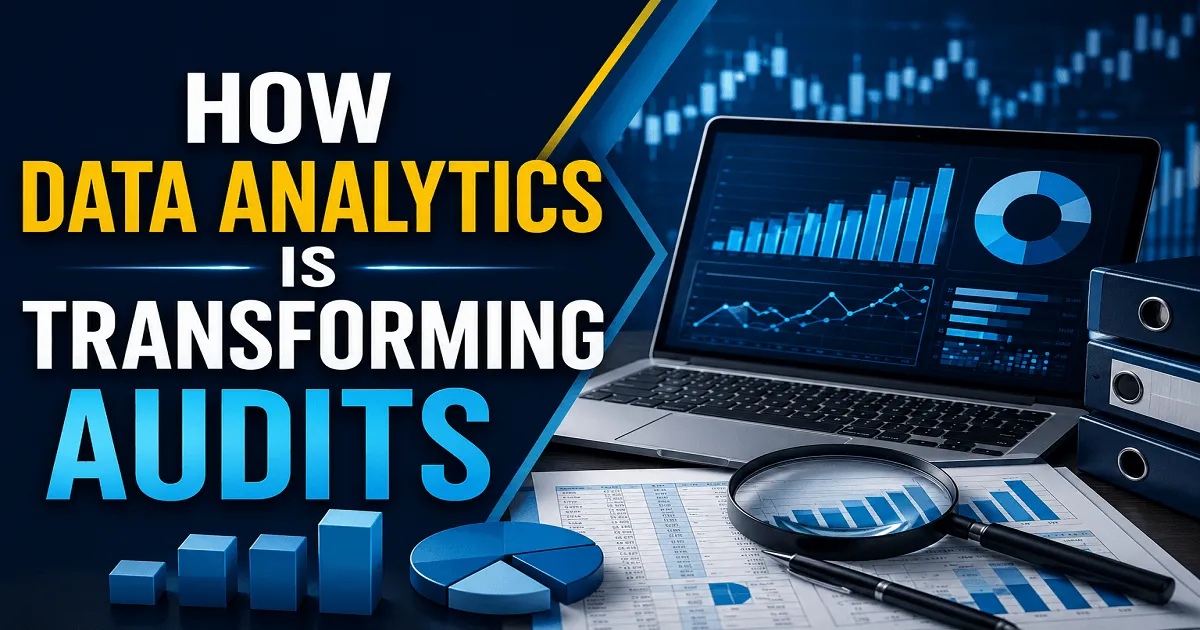
The auditing profession is undergoing a significant transformation. Traditionally, auditors relied on manual sampling techniques and paper-based verification to assess financial records. Today, advances in data analytics are enabling auditors to examine large volumes of financial data with greater speed, accuracy, and efficiency.
Data analytics is no longer a technology used only by large organizations. It has become an essential tool for audit professionals seeking to improve audit quality, identify risks, and provide deeper business insights. As businesses generate increasing amounts of digital data, Chartered Accountants who embrace analytics are better equipped to deliver value beyond compliance.
What Is Data Analytics in Auditing?
Data analytics in auditing refers to the use of technology and analytical techniques to collect, process, and evaluate financial and operational data. Instead of reviewing only a small sample of transactions, auditors can analyze entire datasets to identify unusual patterns, exceptions, and potential risks.
This approach allows auditors to make more informed decisions based on comprehensive evidence.
Why Data Analytics Is Becoming Essential
Modern businesses process thousands of transactions every day. Manual audit methods alone cannot efficiently examine such large volumes of information.
Data analytics helps auditors:
- Analyze complete datasets instead of limited samples
- Detect unusual or high-risk transactions
- Improve audit accuracy
- Reduce manual effort
- Deliver faster audit results
- Provide meaningful insights to clients
As a result, audit engagements become more efficient and effective.
Key Benefits of Data Analytics in Auditing
1. Better Risk Identification
Analytical tools help auditors identify unusual transactions, duplicate payments, unexpected trends, and anomalies that may require further investigation.
This enables auditors to focus on areas with the highest level of risk.
2. Improved Audit Quality
By analyzing a larger volume of financial information, auditors obtain stronger evidence to support their conclusions.
This enhances the overall reliability and quality of the audit process.
3. Faster Audit Execution
Automation reduces the time required for repetitive tasks such as data extraction, reconciliation, and transaction testing.
Auditors can spend more time evaluating risks and discussing business improvements with clients.
4. Enhanced Fraud Detection
Data analytics can identify patterns that may indicate fraud, including:
- Duplicate invoices
- Unusual vendor payments
- Suspicious journal entries
- Unauthorized transactions
- Round-value payments
- Irregular timing of transactions
Early detection helps organizations respond quickly to potential financial misconduct.
5. Better Client Insights
Beyond compliance, auditors can provide valuable observations about operational efficiency, financial performance, and internal controls.
This strengthens the advisory role of Chartered Accountants.
Technologies Driving Audit Analytics
Several modern technologies are reshaping the audit process, including:
- Artificial Intelligence (AI)
- Machine Learning
- Robotic Process Automation (RPA)
- Business Intelligence Dashboards
- Cloud Accounting Systems
- Predictive Analytics
- Data Visualization Tools
These technologies enable auditors to process complex financial information more effectively.
Challenges in Using Data Analytics
While data analytics offers significant advantages, organizations also face certain challenges, such as:
- Poor data quality
- Incomplete financial records
- Data privacy concerns
- Cybersecurity risks
- Integration with existing systems
- Need for skilled professionals
Addressing these challenges requires investment in technology, training, and robust data governance.
The Changing Role of Chartered Accountants
As technology automates routine audit procedures, the role of Chartered Accountants is evolving.
Today's auditors are expected to:
- Interpret analytical results
- Evaluate business risks
- Strengthen internal controls
- Provide strategic recommendations
- Support informed decision-making
Professional judgment remains essential, even in a technology-driven environment.
Skills Every Auditor Should Develop
To succeed in the modern audit profession, Chartered Accountants should strengthen skills in:
- Data Analytics
- Financial Analysis
- Artificial Intelligence
- Audit Technology
- Risk Assessment
- Cybersecurity Awareness
- Business Intelligence Tools
- Data Visualization
- Communication and Advisory Services
Continuous learning is essential to remain competitive in the evolving profession.
Best Practices for Audit Firms
Audit firms can maximize the benefits of data analytics by:
- Investing in reliable analytical tools
- Training audit teams regularly
- Standardizing data collection processes
- Protecting sensitive client information
- Integrating analytics into every stage of the audit
- Continuously updating technology and methodologies
These practices improve both efficiency and audit quality.
Final Thoughts
Data analytics is transforming the audit profession by enabling auditors to examine larger datasets, detect risks more effectively, and provide deeper business insights. Rather than replacing auditors, technology enhances their ability to deliver high-quality audits and value-added advisory services.
For Chartered Accountants, adopting data analytics is no longer optional—it is becoming a professional necessity. Firms that embrace technology while combining it with sound judgment, ethical standards, and industry expertise will be better positioned to meet evolving client expectations and remain competitive in the years ahead.
The future of auditing lies in combining advanced analytics with professional expertise to deliver audits that are more accurate, efficient, and insightful than ever before.
Category : Auditing | Comments : 0 | Hits : 1200






Comments