 CA Sansaar


Common Accounting Errors That Trigger Regulatory Scrutiny
 Print
Print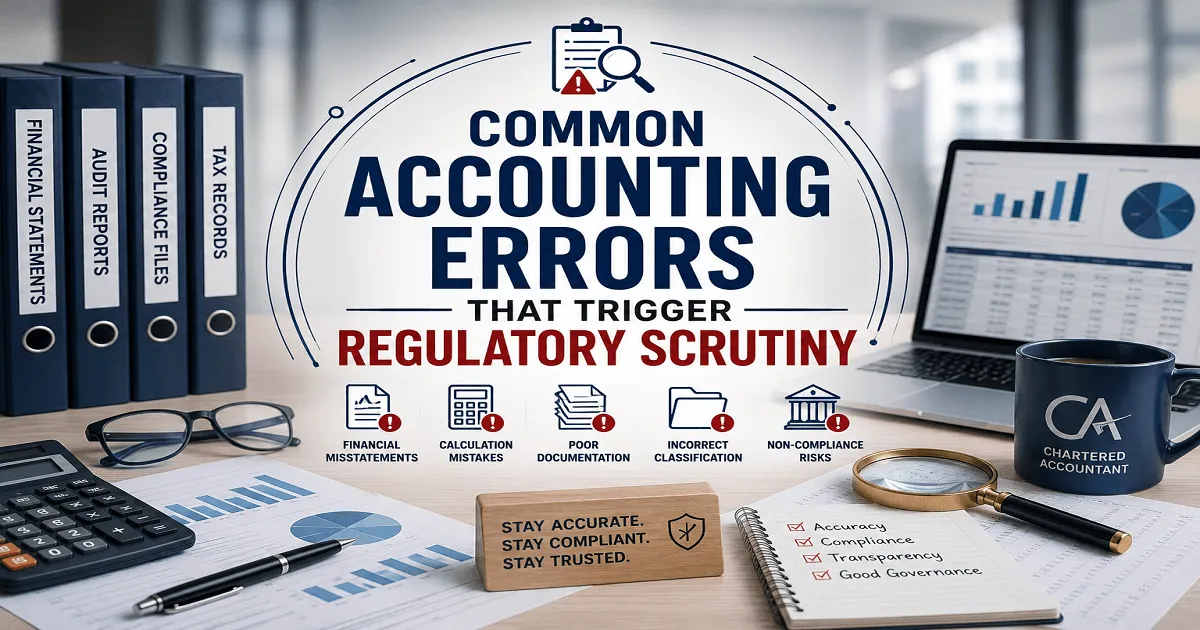
Accurate accounting is the backbone of every successful business. Financial statements are not only used by management for decision-making but are also reviewed by regulators, tax authorities, investors, lenders, and auditors. Even minor accounting mistakes can raise concerns, trigger regulatory scrutiny, and expose businesses to penalties, financial losses, and reputational damage.
As regulatory requirements continue to evolve, businesses must ensure that their accounting records are accurate, transparent, and compliant with applicable accounting standards and tax laws. Chartered Accountants play a crucial role in helping organizations maintain high-quality financial reporting and avoid costly errors.
Why Accurate Accounting Matters
Accounting is more than recording transactions—it forms the foundation of financial reporting and regulatory compliance. Reliable accounting records enable businesses to:
- Prepare accurate financial statements
- Meet statutory and tax compliance requirements
- Support informed business decisions
- Build investor and lender confidence
- Minimize the risk of regulatory action
Poor accounting practices, on the other hand, can result in incorrect financial reporting and increased scrutiny from authorities.
Common Accounting Errors That Businesses Should Avoid
1. Incorrect Revenue Recognition
Recognizing revenue before it is earned or delaying revenue recognition can significantly distort financial statements. Businesses should follow applicable accounting standards and recognize revenue only when performance obligations have been satisfied.
2. Improper Expense Classification
Expenses must be classified correctly as operating, capital, or non-operating expenses. Misclassification may affect profitability, taxation, and financial analysis.
3. Failure to Reconcile Accounts Regularly
Bank accounts, customer balances, vendor accounts, and tax ledgers should be reconciled periodically. Failure to perform timely reconciliations can lead to duplicate entries, missing transactions, or reporting errors.
4. Inadequate Supporting Documentation
Every financial transaction should be supported by invoices, receipts, contracts, or other appropriate records. Missing documentation makes it difficult to verify transactions during audits or regulatory reviews.
5. Errors in GST and Tax Accounting
Incorrect GST calculations, inaccurate Input Tax Credit (ITC) claims, delayed tax payments, or errors in tax returns can attract notices, interest, and penalties.
Businesses should regularly review tax records to ensure compliance with applicable laws.
6. Weak Internal Controls
Poor segregation of duties, inadequate approval processes, and ineffective financial controls increase the risk of fraud and accounting errors.
Strong internal controls help protect business assets and improve financial reporting reliability.
7. Failure to Record Adjusting Entries
Depreciation, accruals, provisions, prepaid expenses, and outstanding liabilities should be recorded at the end of each reporting period.
Ignoring adjusting entries may result in inaccurate financial statements.
8. Duplicate or Missing Transactions
Duplicate invoices, omitted sales, unrecorded expenses, or incorrect journal entries can significantly impact financial accuracy and create unnecessary compliance issues.
9. Delayed Financial Reporting
Late preparation of financial statements reduces management's ability to make timely decisions and may affect statutory compliance deadlines.
Timely financial reporting supports both operational efficiency and regulatory compliance.
10. Ignoring Changes in Accounting Standards
Accounting regulations continue to evolve. Businesses that fail to update their accounting policies may unknowingly prepare non-compliant financial statements.
Regular professional guidance helps organizations stay aligned with current standards.
Consequences of Accounting Errors
Accounting mistakes can lead to:
- Regulatory notices and investigations
- Financial penalties and interest
- Delays in statutory audits
- Tax disputes
- Loss of investor confidence
- Reduced business credibility
- Poor management decisions based on inaccurate financial information
Preventing these issues is significantly more cost-effective than correcting them later.
How Chartered Accountants Help Prevent Errors
Chartered Accountants play a vital role in strengthening financial governance by:
- Reviewing accounting records
- Ensuring compliance with accounting standards
- Advising on tax and regulatory requirements
- Implementing internal financial controls
- Conducting internal reviews and audits
- Identifying financial risks before they become major issues
Their expertise helps businesses improve financial accuracy while reducing compliance risks.
Best Practices for Businesses
Organizations can minimize accounting errors by:
- Maintaining accurate books of accounts
- Performing monthly reconciliations
- Preserving supporting documentation
- Reviewing GST and tax records regularly
- Strengthening internal controls
- Using reliable accounting software
- Providing ongoing staff training
- Consulting Chartered Accountants for complex transactions
These practices improve transparency and support long-term business growth.
Final Thoughts
Accurate accounting is essential for maintaining regulatory compliance, protecting business reputation, and supporting informed financial decisions. While some accounting errors may appear minor, they can lead to serious consequences if left uncorrected.
Businesses that invest in sound accounting practices, strong internal controls, and professional guidance from Chartered Accountants are better equipped to avoid regulatory scrutiny and build long-term financial stability.
In today's dynamic regulatory environment, proactive financial management is not just a compliance requirement—it is a strategic advantage.
Category : Chartered Accountant | Comments : 0 | Hits : 35





Comments