 CA Sansaar


Virtual CFO vs Traditional CFO: Which Is Better for Growing Businesses?
 Print
Print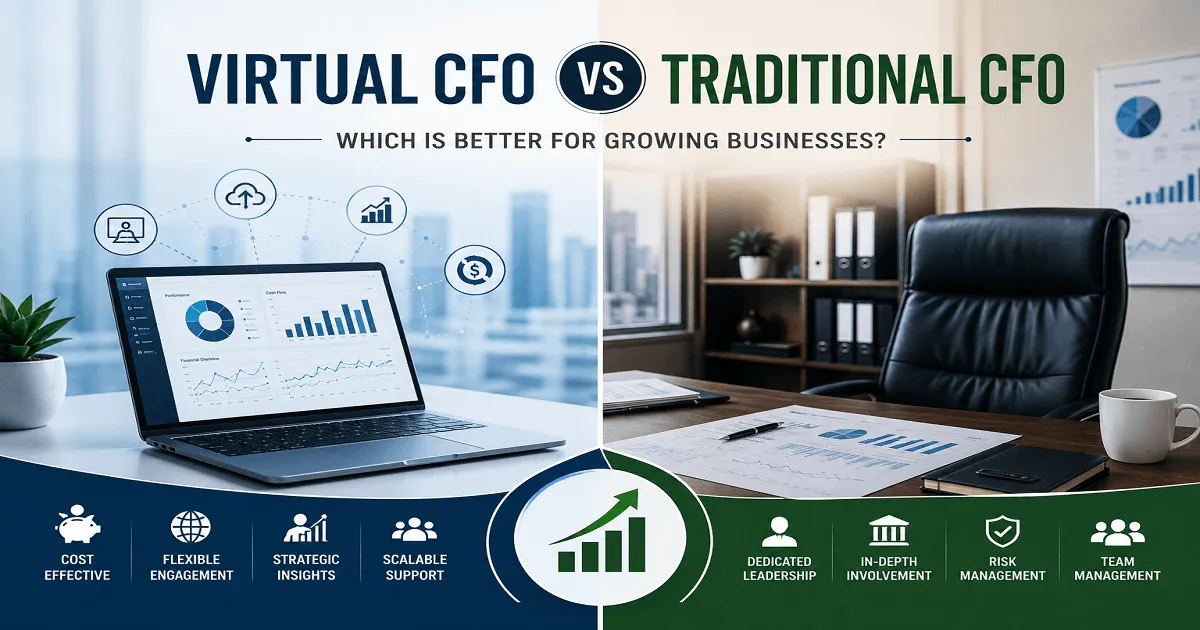
As businesses grow, financial management becomes increasingly complex. Managing cash flow, budgeting, financial reporting, taxation, compliance, fundraising, and strategic planning requires more than basic accounting support.
For many growing businesses, the question is whether to hire a Traditional CFO as a full-time executive or work with a Virtual CFO who provides financial leadership on a flexible or outsourced basis.
Both models offer valuable advantages, but the right choice depends on the company's size, financial complexity, growth stage, and strategic requirements.
What Is a Traditional CFO?
A Traditional CFO is a full-time senior executive responsible for overseeing an organization's financial strategy and operations.
Their responsibilities may include:
- Financial planning and forecasting
- Budget management
- Cash flow monitoring
- Financial reporting
- Risk management
- Investor and lender relations
- Strategic decision-making
- Financial team management
- Internal controls and governance
A traditional CFO is generally more suitable for established organizations with complex financial operations and a need for dedicated in-house leadership.
What Is a Virtual CFO?
A Virtual CFO provides CFO-level financial expertise without being employed as a full-time executive.
Virtual CFOs can work remotely and may serve multiple businesses depending on their engagement structure. Their services can include:
- Financial planning
- Budgeting and forecasting
- Cash flow management
- Management reporting
- Business performance analysis
- Financial strategy
- Fundraising support
- Risk management
- Process improvement
This model can be particularly attractive to startups, SMEs, and businesses that need strategic financial expertise but do not yet require a full-time CFO.
Virtual CFO vs Traditional CFO: Key Differences
|
Factor |
Virtual CFO |
Traditional CFO |
|
Employment |
External / outsourced |
Full-time employee |
|
Cost Structure |
Flexible engagement |
Fixed executive compensation |
|
Availability |
Based on agreed engagement |
Dedicated to one organization |
|
Best Suited For |
Startups, SMEs, growing businesses |
Established and larger organizations |
|
Flexibility |
High |
Moderate |
|
Strategic Support |
Yes |
Yes |
|
In-House Presence |
Usually limited |
Full-time |
|
Scalability |
Easy to adjust |
More structured |
Advantages of a Virtual CFO
1. Cost-Effective Financial Expertise
Hiring a full-time CFO can represent a significant commitment for a growing company. A Virtual CFO allows businesses to access senior-level financial expertise through a flexible engagement model.
2. Flexible Support
Businesses can adjust the scope of Virtual CFO services according to their changing needs. A company may require more support during fundraising, expansion, restructuring, or financial planning and less support during stable periods.
3. Access to Specialized Experience
An experienced Virtual CFO may have worked with multiple businesses and industries. This exposure can provide valuable insights into financial strategy, reporting, risk management, and growth planning.
4. Ideal for Startups and SMEs
Smaller businesses may not need a full-time CFO but can still benefit from professional financial leadership.
A Virtual CFO can help founders understand financial performance, manage cash flow, prepare forecasts, and make better strategic decisions.
Advantages of a Traditional CFO
1. Dedicated Leadership
A traditional CFO works exclusively for one organization and can become deeply involved in its operations, culture, and long-term strategy.
2. Direct Team Management
For organizations with large finance departments, an in-house CFO can directly manage accounting and finance teams and coordinate with other departments.
3. Complex Financial Operations
Larger organizations may require continuous oversight of treasury, capital allocation, investor relations, financial controls, risk management, and corporate governance.
4. Strong Internal Collaboration
An in-house CFO can work closely with the CEO, board, department heads, and operational teams on a daily basis.
Which Option Is Better for Growing Businesses?
There is no universal answer.
A Virtual CFO may be a better choice when:
- The business is a startup or SME.
- The company needs strategic financial expertise but not full-time leadership.
- The finance team is relatively small.
- The business is preparing for fundraising.
- Cash flow and financial planning require improvement.
- The company wants flexible access to senior financial expertise.
A Traditional CFO may be more appropriate when:
- The organization has complex financial operations.
- The finance team requires dedicated leadership.
- The business has significant investor or lender relationships.
- Financial decisions need continuous executive oversight.
- The organization requires an in-house executive for governance and strategy.
The Role of Chartered Accountants as Virtual CFOs
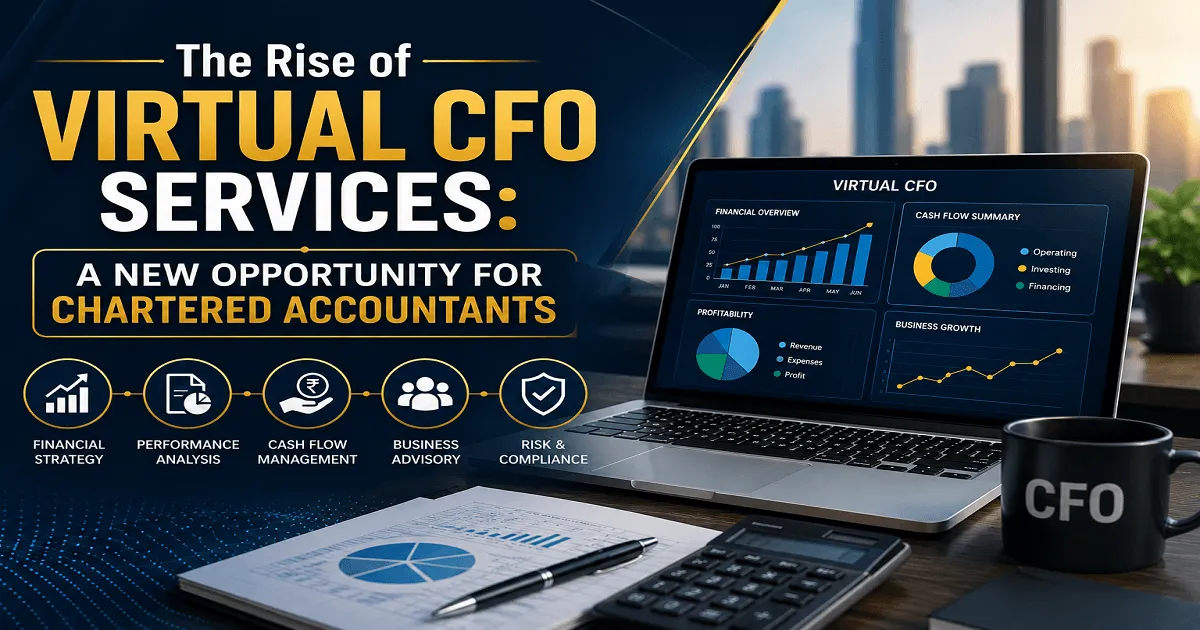
Chartered Accountants are particularly well-positioned to provide Virtual CFO services because of their expertise in accounting, taxation, auditing, financial reporting, compliance, and business advisory.
A CA serving as a Virtual CFO can move beyond traditional compliance work and help businesses with:
- Financial strategy
- Cash flow optimization
- Budgeting and forecasting
- Business performance analysis
- Fundraising preparation
- Financial risk management
- Management reporting
- Strategic decision-making
This creates an important opportunity for CA firms looking to expand into high-value advisory services.
How Businesses Can Choose the Right Model
Before selecting a CFO model, businesses should evaluate:
Business Size: Is the organization a startup, SME, or established company?
Financial Complexity: How complex are its financial operations?
Growth Plans: Is the company preparing for rapid expansion, fundraising, acquisition, or restructuring?
Budget: Can the business justify a full-time CFO?
Strategic Requirements: Does the organization need daily executive leadership or periodic strategic financial guidance?
Answering these questions can help management select the most suitable model.
The Future of CFO Services
The rise of cloud accounting, automation, artificial intelligence, and remote collaboration is changing how businesses access financial expertise.
As technology reduces the need for physical presence in many finance functions, Virtual CFO services are becoming increasingly viable for growing companies.
At the same time, larger organizations will continue to require traditional CFOs for complex financial leadership, governance, investor relations, and enterprise-level strategy.
Therefore, the future is unlikely to be about one model replacing the other. Instead, businesses will increasingly choose the model that best fits their stage of growth.
Final Thoughts
A Virtual CFO and a Traditional CFO both provide valuable financial leadership, but they serve different business needs.
For startups and growing SMEs, a Virtual CFO can provide strategic expertise, flexibility, and scalable support without requiring a full-time executive commitment. For larger organizations with complex operations, a Traditional CFO may provide the dedicated leadership and continuous oversight required.
For Chartered Accountants, the growing demand for Virtual CFO services represents a significant opportunity to expand beyond traditional accounting and compliance and become strategic financial partners to growing businesses.
Ultimately, the right choice is not simply about Virtual CFO vs Traditional CFO. It is about choosing the financial leadership model that aligns with the business's current needs, growth plans, and long-term strategy.
Category : General | Comments : 0 | Hits : 36






Comments