 CA Sansaar


Internal Audit vs Statutory Audit: Key Differences Every Business Should Know
 Print
Print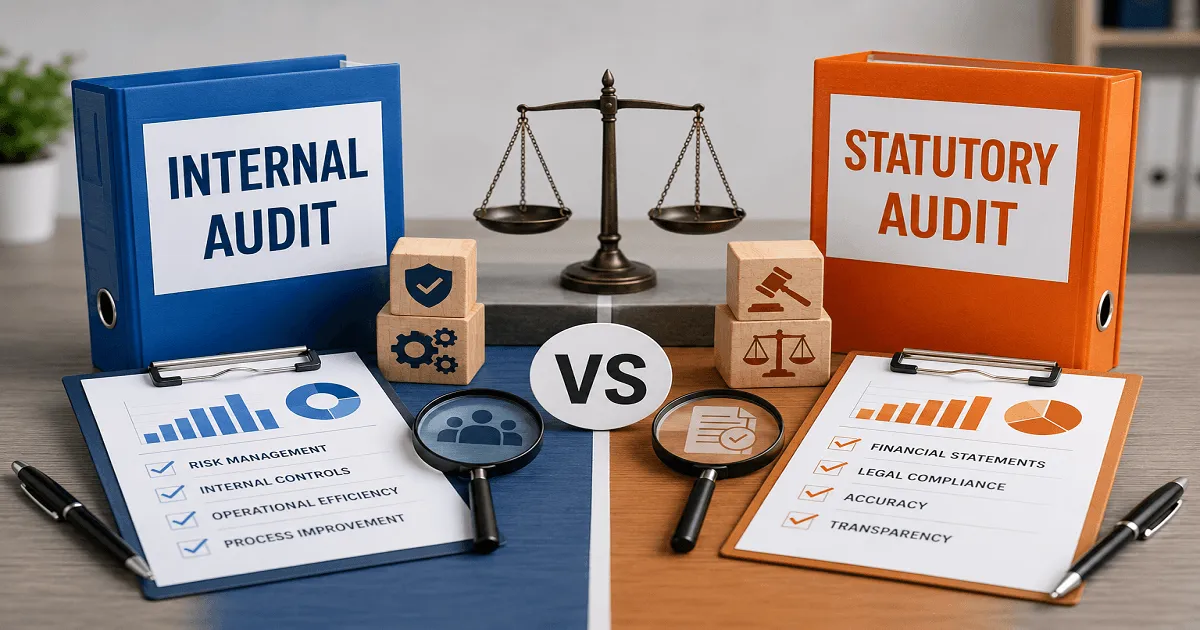
Audits play a crucial role in ensuring financial transparency, regulatory compliance, and effective risk management within an organization. Among the various types of audits, Internal Audit and Statutory Audit are the two most common. Although both involve examining financial records and business processes, they differ significantly in terms of purpose, scope, responsibility, and reporting.
Understanding these differences helps business owners, finance professionals, and Chartered Accountants ensure better governance and compliance.
What Is an Internal Audit?
An Internal Audit is an independent evaluation conducted to assess a company's internal controls, risk management processes, operational efficiency, and compliance with internal policies.
The primary objective of an internal audit is to improve business operations and identify areas where processes can be strengthened.
Internal audits are generally performed by an in-house internal audit team or an external professional appointed by the management.
What Is a Statutory Audit?
A Statutory Audit is a legally required examination of a company's financial statements conducted by an independent Chartered Accountant or audit firm.
Its purpose is to determine whether the financial statements present a true and fair view of the company's financial position in accordance with applicable accounting standards and legal requirements.
The audit is mandatory for entities covered under relevant laws such as the Companies Act and other applicable regulations.
Internal Audit vs Statutory Audit
1. Objective
Internal Audit
The main objective is to improve business processes, strengthen internal controls, manage risks, and enhance operational efficiency.
Statutory Audit
The primary objective is to provide an independent opinion on whether the financial statements are free from material misstatement and comply with applicable laws.
2. Nature
Internal Audit
Internal Audit is a management tool designed to improve organizational performance.
Statutory Audit
Statutory Audit is a legal requirement for eligible entities.
3. Appointment
Internal Audit
The management or Board of Directors appoints the Internal Auditor.
Statutory Audit
The Statutory Auditor is appointed as per the provisions of applicable laws and regulations.
4. Scope
Internal Audit
Covers financial controls, operational processes, compliance, fraud prevention, risk management, and efficiency improvements.
Statutory Audit
Focuses mainly on examining financial statements and expressing an audit opinion.
5. Reporting
Internal Audit
Reports are submitted to management or the Audit Committee with recommendations for improvement.
Statutory Audit
The audit report is issued to shareholders and forms part of the company's financial statements.
6. Frequency
Internal Audit
Usually conducted throughout the year based on the organization's audit plan.
Statutory Audit
Normally conducted annually after the financial year ends.
Benefits of Internal Audit
Internal Audit provides several advantages:
- Strengthens internal controls
- Identifies operational inefficiencies
- Improves risk management
- Detects potential fraud
- Ensures compliance with company policies
- Supports better decision-making
- Enhances overall business performance
It acts as a preventive mechanism rather than merely identifying problems after they occur.
Benefits of Statutory Audit
Statutory Audit offers important benefits such as:
- Enhances the credibility of financial statements
- Builds investor confidence
- Ensures compliance with legal requirements
- Improves financial transparency
- Increases stakeholder trust
- Supports regulatory compliance
An independent audit opinion provides assurance to shareholders, lenders, regulators, and other stakeholders.
Can a Company Have Both Audits?
Yes. Many companies conduct Internal Audits regularly while also undergoing an annual Statutory Audit.
Internal Audit focuses on improving business processes throughout the year, whereas Statutory Audit verifies the accuracy and reliability of the financial statements at the end of the financial year.
Together, both audits contribute to stronger governance and better financial management.
Role of Chartered Accountants
Chartered Accountants play a vital role in both Internal and Statutory Audits by:
- Evaluating financial records
- Assessing internal controls
- Identifying compliance gaps
- Recommending process improvements
- Ensuring adherence to accounting standards
- Providing an independent audit opinion
Their expertise helps organizations maintain financial discipline and comply with regulatory requirements.
Final Thoughts
Although Internal Audit and Statutory Audit serve different purposes, both are essential for a well-governed organization. Internal Audit helps management improve operations, reduce risks, and strengthen internal controls, while Statutory Audit provides independent assurance on the accuracy and fairness of financial statements.
Businesses that effectively utilize both audits are better equipped to maintain compliance, improve operational efficiency, build stakeholder confidence, and achieve sustainable growth.
Understanding the distinction between these two audits enables organizations to make informed decisions and establish a strong foundation for long-term success.
Category : Auditing | Comments : 0 | Hits : 1015








Comments