 CA Sansaar


Input Tax Credit (ITC) Under GST: Rules, Conditions, and Common Mistakes
 Print
Print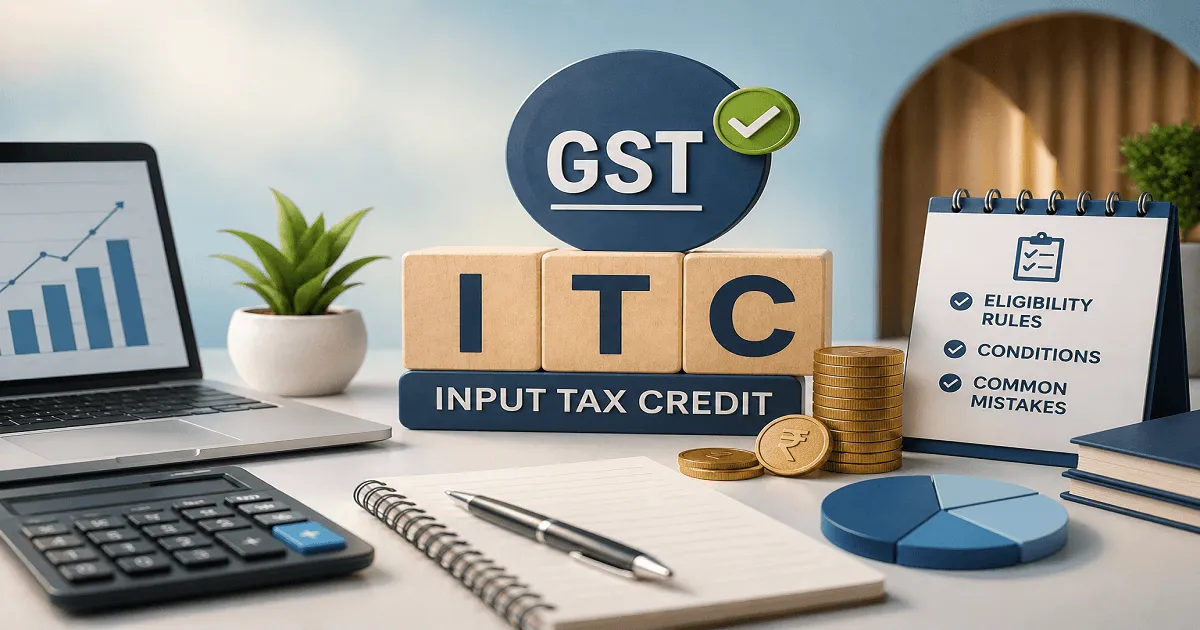
The Goods and Services Tax (GST) regime has transformed India's indirect tax landscape by streamlining the taxation process and eliminating the cascading effect of taxes. One of the most significant benefits under GST is the Input Tax Credit (ITC) mechanism, which helps businesses reduce their tax burden. Whether you are a business owner, finance professional, or someone exploring GST jobs, understanding ITC is crucial for ensuring compliance and avoiding costly errors.
What is Input Tax Credit (ITC)?
Input Tax Credit (ITC) refers to the tax paid by a registered taxpayer on purchases of goods or services used for business purposes. This credit can be utilized to offset the GST liability on outward supplies.
For example, if a business pays GST on raw materials purchased and later collects GST on the sale of finished goods, the GST paid on purchases can be claimed as ITC against the GST payable on sales.
The ITC mechanism prevents double taxation and improves cash flow for businesses.
Conditions for Claiming ITC Under GST
Under Section 16 of the CGST Act, a registered taxpayer can claim ITC only when the following conditions are fulfilled:
1. Possession of a Valid Tax Invoice
The taxpayer must possess a tax invoice, debit note, or any other prescribed tax-paying document issued by a registered supplier.
2. Receipt of Goods or Services
The goods or services for which ITC is claimed must have been received by the taxpayer.
3. Tax Payment by the Supplier
The supplier should have deposited the tax collected with the government.
4. Filing of GST Returns
The recipient must file the applicable GST returns within the prescribed time limit to avail of the credit.
5. Time Limit for Availing ITC
ITC related to an invoice can generally be claimed up to 30th November following the end of the relevant financial year or the date of filing the annual return, whichever is earlier.
Blocked Credits Under GST
Not all GST paid qualifies for ITC. Section 17(5) of the CGST Act specifies certain blocked credits that cannot be claimed.
Some common examples include:
- Motor vehicles used for personal purposes
- Membership fees of clubs and health centers
- Personal consumption expenses
- Goods lost, stolen, destroyed, or distributed as free samples
- Travel benefits provided to employees on vacation
Businesses should carefully review these restrictions before claiming credit.
Common Mistakes Taxpayers Make While Claiming ITC
Despite the clear provisions under GST law, many taxpayers make errors that lead to notices, penalties, and litigation.
1. Claiming ITC Without Valid Documentation
One of the most common mistakes is claiming ITC without possessing proper invoices or supporting documents.
2. Mismatch in GST Returns
Differences between purchase records and the details reflected in GST returns can result in disputes during assessments.
3. Ignoring Blocked Credits
Many businesses inadvertently claim ITC on expenses that are specifically restricted under the GST law.
4. Delayed Return Filing
Failure to file GST returns within the stipulated timeline can impact the availability of ITC.
5. Lack of Vendor Reconciliation
Regular reconciliation with supplier data is essential to ensure that the suppliers have correctly reported transactions and paid the corresponding taxes.
Best Practices to Ensure Smooth ITC Compliance
To maximize ITC benefits and reduce compliance risks, businesses should adopt the following practices:
Conduct Periodic Reconciliations
Compare purchase registers with GST return data regularly to identify discrepancies.
Maintain Proper Documentation
Store invoices, debit notes, and other relevant records systematically for future reference.
Monitor Vendor Compliance
Work with reliable vendors who consistently comply with GST requirements.
Review Blocked Credit Provisions
Train the finance team to identify expenses that do not qualify for ITC.
Seek Professional Guidance
Complex transactions often require expert interpretation of GST provisions to avoid unintended errors.
Why ITC Compliance Matters
Efficient ITC management directly impacts an organization's working capital and profitability. Incorrect claims can trigger departmental scrutiny, leading to financial penalties and reputational risks. Therefore, businesses should treat ITC compliance as an ongoing process rather than a one-time activity.
Additionally, professionals with expertise in GST and ITC are increasingly valued in the market. Individuals pursuing careers in taxation and GST jobs can significantly enhance their prospects by developing a thorough understanding of ITC rules, conditions, and compliance requirements.
Conclusion
Input Tax Credit remains one of the most beneficial yet closely monitored aspects of the GST framework. By understanding the eligibility conditions, recognizing blocked credits, and avoiding common mistakes, businesses can optimize their tax position while remaining compliant with the law.
For businesses and professionals seeking reliable insights on GST updates, taxation trends, and career opportunities related to GST jobs, CASANSAAR serves as a valuable platform to stay informed and make well-informed decisions in the ever-evolving tax landscape.
Category : GST | Comments : 0 | Hits : 736






Comments