 CA Sansaar


Tax Saving vs Tax Planning: What Every Taxpayer Should Know
 Print
Print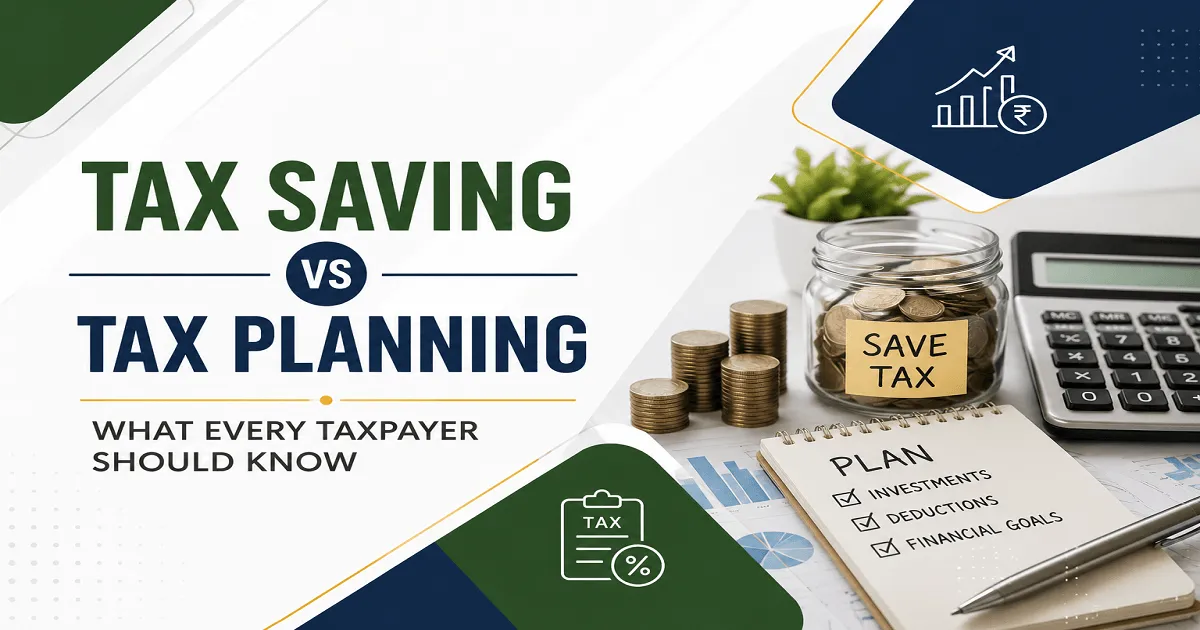
When it comes to managing taxes, many taxpayers use the terms Tax Saving and Tax Planning interchangeably. However, while both concepts aim to reduce tax liability, they are not the same. Understanding the difference can help individuals and businesses make smarter financial decisions and achieve long-term financial goals.
Tax saving is often a short-term activity focused on reducing taxes for the current financial year, whereas tax planning is a broader strategy that involves managing finances efficiently throughout the year. Knowing how these concepts work together can help taxpayers optimize their finances while staying compliant with tax laws.
What is Tax Saving?
Tax Saving refers to reducing tax liability by taking advantage of deductions, exemptions, and investments permitted under the Income Tax Act.
Most taxpayers focus on tax-saving investments towards the end of the financial year to lower their taxable income and reduce the amount of tax payable.
Common Tax Saving Options
- Public Provident Fund (PPF)
- National Pension System (NPS)
- Equity Linked Savings Scheme (ELSS)
- Life Insurance Premiums
- Health Insurance Premiums
- Home Loan Benefits
- Eligible Tax Deductions under applicable provisions
The primary objective of tax saving is to minimize the tax burden for a particular financial year.
What is Tax Planning?
Tax Planning is a comprehensive approach to managing income, investments, expenses, and financial transactions in a tax-efficient manner throughout the year.
It involves evaluating various financial decisions in advance to ensure maximum tax efficiency while supporting long-term financial objectives.
Examples of Tax Planning
- Choosing the appropriate tax regime
- Planning investments systematically
- Structuring salary components efficiently
- Managing capital gains effectively
- Optimizing business expenses
- Retirement planning
- Wealth creation strategies
Tax planning focuses not only on reducing taxes but also on improving overall financial health.
Tax Saving vs Tax Planning: Key Differences
|
Tax Saving |
Tax Planning |
|
Focuses on reducing current tax liability |
Focuses on long-term financial and tax efficiency |
|
Usually done near year-end |
Done throughout the year |
|
Limited to deductions and exemptions |
Covers income, investments, expenses, and financial decisions |
|
Short-term approach |
Long-term approach |
|
Main goal is tax reduction |
Main goal is financial optimization and tax efficiency |
In simple terms, tax saving is one part of tax planning, but tax planning goes far beyond merely reducing taxes.
Why Tax Planning Matters More
Many taxpayers rush to invest in tax-saving products during the last few months of the financial year. While this may reduce taxes, it often leads to hurried financial decisions that may not align with personal goals.
Proper tax planning helps taxpayers:
- Make informed investment decisions
- Avoid last-minute tax-saving investments
- Improve cash flow management
- Reduce future tax liabilities
- Achieve long-term financial goals
- Build wealth systematically
A well-planned strategy ensures that tax benefits complement overall financial planning rather than drive it.
Common Mistakes Taxpayers Make
Focusing Only on Tax Saving
Many individuals invest solely to save tax without evaluating returns, liquidity, or risk factors.
Waiting Until the Last Minute
Last-minute investments often result in poor financial choices and missed opportunities.
Ignoring Financial Goals
Tax-saving investments should support goals such as retirement planning, education funding, or wealth creation.
Not Reviewing Tax Regime Options
Choosing the wrong tax regime can affect overall tax efficiency.
How to Build an Effective Tax Planning Strategy
To make tax planning effective:
✔ Start planning at the beginning of the financial year
✔ Review income sources regularly
✔ Diversify investments based on financial goals
✔ Monitor tax-saving opportunities throughout the year
✔ Evaluate tax implications before major financial decisions
✔ Consult a Chartered Accountant or tax professional when needed
Final Thoughts
Tax Saving and Tax Planning are closely related, but they serve different purposes. Tax saving focuses on reducing taxes through eligible deductions and investments, while tax planning involves creating a comprehensive strategy for managing finances efficiently.
The most successful taxpayers do not wait until the end of the financial year to think about taxes. Instead, they adopt a proactive approach that combines smart investments, financial discipline, and effective tax planning.
Remember, the objective should not be just to save tax, but to build long-term financial security while staying tax-efficient.
Category : Income Tax | Comments : 0 | Hits : 1108







Comments