 CA Sansaar


Belated vs Revised Return: A Taxpayer's Guide
 Print
Print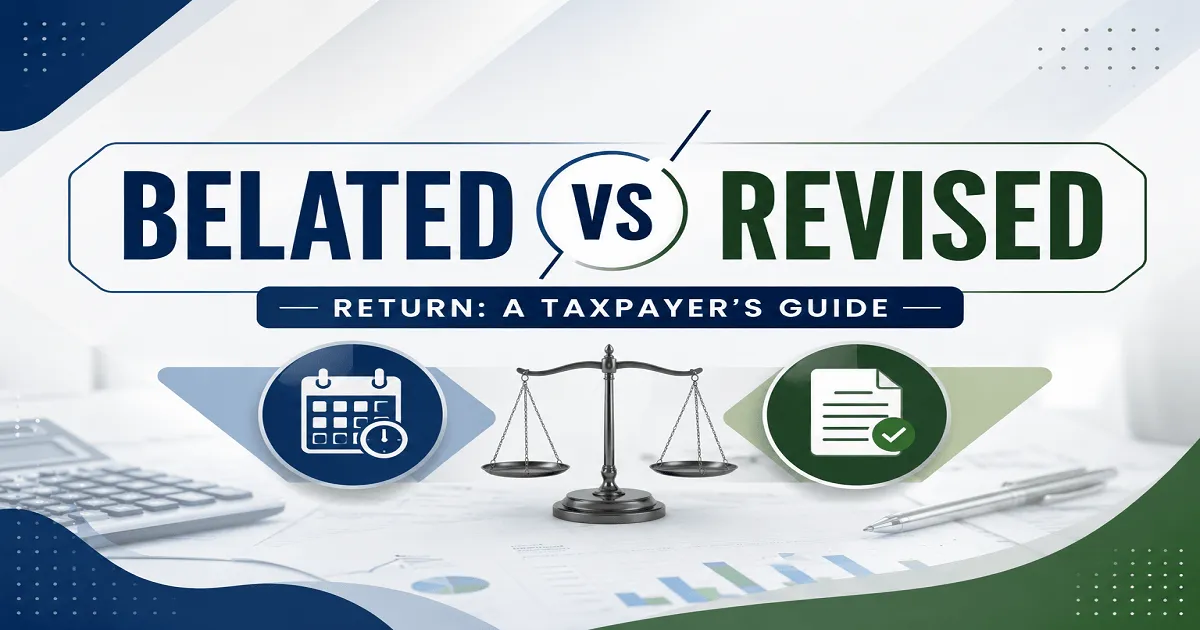
Filing an Income Tax Return (ITR) is an important responsibility for every taxpayer. However, mistakes can happen. Some taxpayers miss the filing deadline, while others discover errors in their return after submission. Fortunately, the Income Tax Act provides solutions for both situations through Belated Returns and Revised Returns.
Understanding the difference between these two options is essential to ensure compliance and avoid unnecessary penalties or complications.
What is a Belated Return?
A Belated Return is an income tax return filed after the original due date prescribed by the Income Tax Department.
For example, if a taxpayer fails to file the return within the due date and submits it later within the permitted time limit, the return is treated as a Belated Return.
While this option allows taxpayers to comply even after missing the deadline, it may result in certain consequences such as late filing fees and interest on outstanding tax liabilities.
What is a Revised Return?
A Revised Return is filed when a taxpayer discovers an omission, incorrect information, or mistake in an already filed return.
For instance, if you forgot to report interest income, claimed an incorrect deduction, or entered incorrect details in your original return, you can correct the mistake by filing a Revised Return.
The purpose of a Revised Return is to ensure that the information submitted to the Income Tax Department is accurate and complete.
Belated Return vs Revised Return: Key Difference
The primary difference lies in the reason for filing:
- Belated Return: Filed because the original due date was missed.
- Revised Return: Filed to correct mistakes in a return that has already been submitted.
In simple terms, a Belated Return addresses a delay in filing, while a Revised Return addresses errors in filing.
Common Situations Where a Belated Return May Be Required
Taxpayers may need to file a Belated Return due to:
- Missing the filing deadline
- Delayed collection of financial documents
- Errors in Form 26AS or AIS requiring additional verification
- Last-minute tax calculations
- Lack of awareness regarding filing requirements
Regardless of the reason, filing the return as soon as possible is generally advisable.
Common Situations Where a Revised Return May Be Required
A Revised Return may become necessary when:
- Income has been omitted
- Incorrect deductions have been claimed
- Bank account details were entered incorrectly
- Capital gains were reported inaccurately
- TDS credits were not properly reflected
- Any other error is identified after filing
Correcting mistakes promptly helps reduce future compliance risks.
Consequences of Filing a Belated Return
Taxpayers filing a Belated Return should be aware of certain implications:
Late Filing Fees
A late filing fee may apply depending on the circumstances and income level of the taxpayer.
Interest Liability
Interest may be payable on outstanding tax amounts from the due date until payment.
Delay in Refund Processing
Tax refunds may take longer to process when returns are filed late.
Restrictions on Carry Forward of Certain Losses
Certain losses may not be eligible for carry forward if the return is not filed within the prescribed due date.
Benefits of Filing a Revised Return
Filing a Revised Return offers several advantages:
✔ Correction of genuine mistakes
✔ Accurate reporting of income and deductions
✔ Reduced risk of notices and scrutiny
✔ Better compliance with tax regulations
✔ Improved accuracy of tax records
Rather than ignoring errors, taxpayers should use the revision facility whenever necessary.
Best Practices for Taxpayers
To avoid the need for belated or revised returns:
Maintain Proper Records
Keep salary statements, bank records, investment proofs, and tax documents organized throughout the year.
Review AIS and Form 26AS
Always reconcile tax credits and income details before filing.
Verify Return Details Carefully
Check all income sources, deductions, and personal information before submission.
File Well Before the Deadline
Early filing reduces the risk of errors and last-minute complications.
Seek Professional Guidance
For complex tax situations, consulting a Chartered Accountant can help ensure accurate filing.
Final Thoughts
Missing an ITR due date or discovering an error in a filed return can be stressful, but the Income Tax Act provides remedies through Belated Returns and Revised Returns.
A Belated Return helps taxpayers comply after missing the filing deadline, while a Revised Return allows them to correct mistakes in an already filed return. Understanding the distinction between these two options is essential for maintaining compliance and avoiding unnecessary financial consequences.
The best approach, however, is to file your return accurately and on time. A little preparation today can save significant time, effort, and cost later.
Quick Summary
📌 Missed the due date? → File a Belated Return
📌 Found a mistake after filing? → File a Revised Return
📌 Best practice? → File your ITR accurately and before the deadline.
Category : ITR | Comments : 0 | Hits : 1114







Comments