 CA Sansaar


RBI’s New Measures Could Attract USD 75 Billion in Capital Inflows as Inflation Risks Keep Rate Hike Expectations Alive
 Print
Print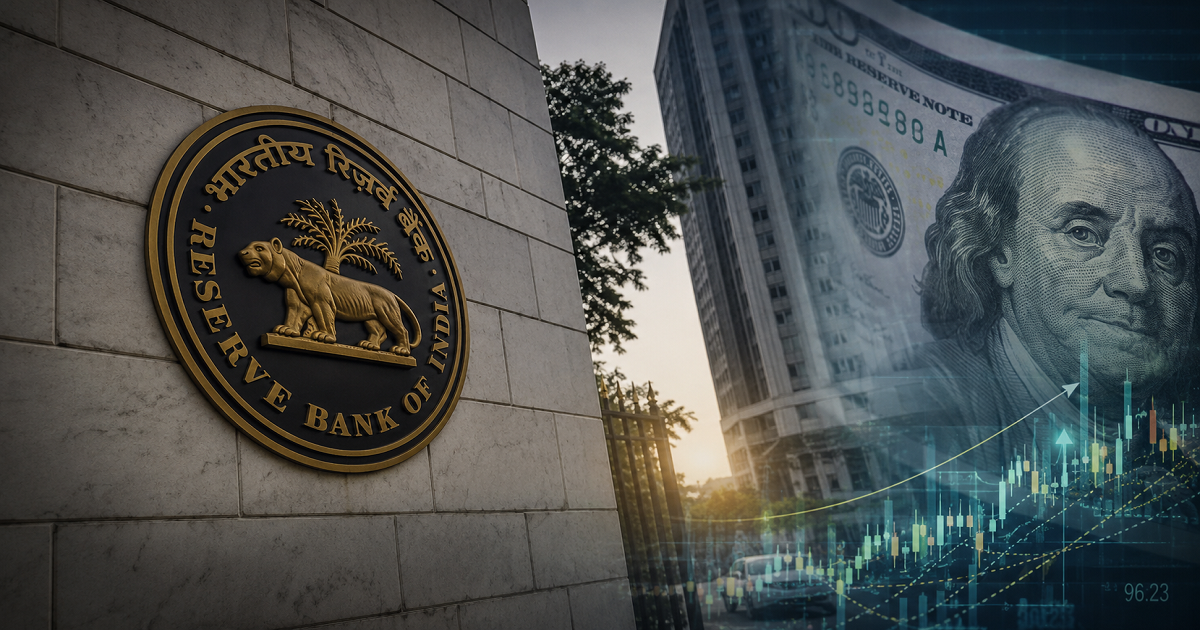
The Reserve Bank of India (RBI) has unveiled a series of policy initiatives that could significantly strengthen foreign capital inflows and improve liquidity conditions across the financial system. Market experts believe these measures may help shift the narrative around the Indian rupee from depreciation concerns toward a more favorable inflow-driven outlook.
According to a recent research report by ICICI Bank Global Markets, the RBI's latest policy package has the potential to attract nearly USD 50 billion in foreign inflows through enhanced borrowing and foreign exchange-related facilities. An additional USD 25 billion could enter Indian debt markets if government securities are included in the Bloomberg Global Bond Index, taking the total potential inflows to approximately USD 75 billion.
RBI Introduces Measures to Encourage Foreign Capital
Among the key announcements is a concessional foreign exchange (FX) swap facility for external commercial borrowings (ECBs) raised by public sector undertakings (PSUs). Additionally, the central bank has extended full hedging cost support for FCNR(B) deposits until September 30, 2026.
The RBI has also widened investment access for Non-Resident Indians (NRIs) and Overseas Citizens of India (OCIs). Further, the period allowed for the realization of export proceeds has been restored to nine months, providing exporters with greater operational flexibility.
Analysts believe these measures will improve banking sector funding conditions, lower short-term borrowing costs, reduce pressure on certificates of deposit (CD) and commercial paper (CP) rates, and enhance demand for corporate bonds.
Tax Reforms and Debt Market Changes Boost Investor Confidence
The government complemented RBI’s efforts by introducing tax-related incentives for foreign investors. These include reductions in capital gains tax and withholding tax on interest income from government securities.
At the same time, the RBI expanded the Fully Accessible Route (FAR) by adding fresh 15-year, 30-year, and 40-year government bond maturities, while removing existing investment restrictions under the general route.
Market participants view these reforms as important steps toward securing inclusion in major global bond indices, particularly the Bloomberg index. Such inclusion could unlock substantial overseas investment flows into India's sovereign debt market.
Financial markets responded positively to these announcements. Government bond yields strengthened, especially in the five-year segment, while the Indian rupee recovered from recent lows amid expectations of increased foreign participation.
RBI Maintains Repo Rate Despite Rising Inflation Concerns
While introducing measures to support capital inflows and market liquidity, the Monetary Policy Committee (MPC) decided to keep the repo rate unchanged at 5.25%. The committee unanimously voted to retain a "Neutral" policy stance.
The RBI acknowledged that global inflation remains elevated and central banks worldwide continue to adopt a cautious approach. Domestically, economic activity remains resilient, with India's economy recording 7.8% year-on-year growth in the fourth quarter.
However, the central bank revised its FY27 GDP growth forecast downward to 6.6%, compared with its earlier estimate of 6.9%. The downgrade reflects concerns over higher crude oil prices, supply-chain challenges, geopolitical tensions, and possible weather-related disruptions linked to El Niño conditions.
Inflation Outlook Remains a Key Concern
The RBI has also raised its inflation outlook for the coming fiscal year. Consumer Price Index (CPI) inflation is now projected at 5.1% for FY27, while core inflation is expected to average 4.7%.
Quarter-wise inflation projections are as follows:
- Q1 FY27: 4.2%
- Q2 FY27: 5.1%
- Q3 FY27: 5.9%
- Q4 FY27: 5.4%
The central bank estimates that direct fuel price transmission alone could contribute nearly 36 basis points to inflation.
Rate Hikes Still on the Table
Despite keeping rates unchanged for now, market analysts believe the inflation trajectory could compel the RBI to tighten monetary policy in the coming months.
ICICI Bank expects cumulative rate hikes of 50–75 basis points to ensure inflation gradually returns toward the RBI’s long-term target of 4%. The report suggests that each MPC meeting remains highly data-dependent, and any broad-based increase in price pressures could accelerate policy action.
Factors such as crude oil prices approaching USD 100 per barrel, prolonged geopolitical disruptions, or weaker monsoon conditions due to El Niño could prompt earlier rate increases. Conversely, if energy prices moderate and supply-side pressures ease, the liquidity benefits generated through FCNR(B) deposits, FAR expansion, and foreign capital inflows could provide the RBI with greater flexibility to delay tightening measures.
For now, liquidity conditions remain comfortable, supported by the RBI dividend transfer and seasonal currency circulation trends, which are expected to aid policy transmission and financial market stability.
Short Summary
The RBI's latest policy initiatives, including FX swap facilities, FCNR(B) deposit support, and expanded investment access for NRIs and OCIs, could attract up to USD 75 billion in foreign inflows. However, rising inflation projections and negative real interest rates may lead to 50–75 basis points of rate hikes unless oil prices soften and monsoon conditions remain favorable.
Category : RBI | Comments : 0 | Hits : 236








Comments